Swirl Wine Bar & Market

Sunday, February 2, 2014

Annual Staff Dinner, Wine and Food From our Favorite Places on Earth


We love our staff!  What's not to love about passionate, socially conscious people who adore wine, food and fun people to share it with.  And did I mention that they are unpretentious, interesting, cool and just downright nice people?  So Kerry and I like to show our appreciation for all of their hard work by cooking an annual, multi-coursed and paired dinner for them at our house.  Here's a run down of the menus, recipes and pairings we put together to show them some love for everything they do for us and you!

Apertivi

~Cocchi Vermouth di Torino and Fresh Louisiana Mandarin Juice
I love a really good vermouth before dinner and the freshness of the juice with the vanilla, caramel and clove notes of the Cocchi were the perfect start to our Italian dinner.  As part of Cocchi's 120th birthday celebrations a few years ago they restarted production of this, their original recipe Vermouth di Torino, first produced back in 1891. It is delicious and couldn't be easier to make...

Equal parts freshly squeezed mandarin juice and Cocchi, shaken and served over ice with a slice of the peel for garnish.

Antipasti


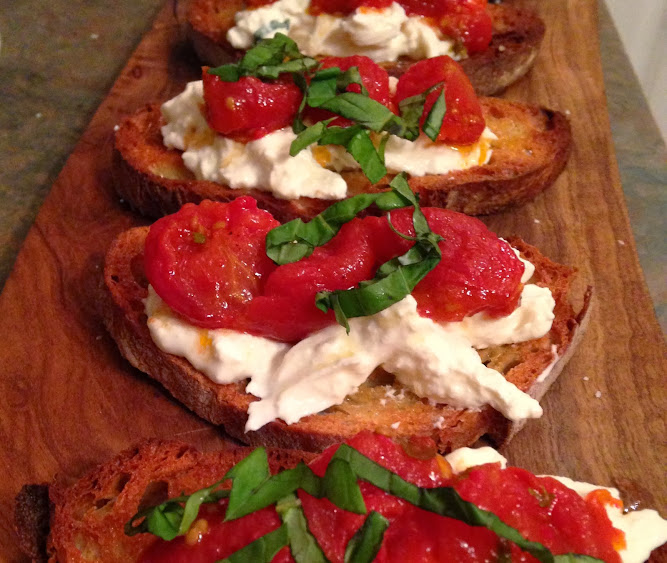
~Roasted Tomato and Burrata Bruschetta
click here for recipe
Ca'Vittoria Brut Rose 


~Lemon and Garlic Gulf Shrimp Bruschetta
This is normally served on top of the bread, but I had a ton of shrimp so I served it individual small bowls
click here for the recipe
2012 Taburno Greco Benevento


~Bresaola and Arugula w/Fresh Shaved Parmigiano
click here for recipe
2012 Ceretto Arneis Blange


~Shaved Fennel and Blood Orange Salad w/Fresh Pecorino di Toscana
click here for the recipe
2012 Dominio IV Sunrise Setting Viognier/Syrah

Primo

~Piemontese Tajarin Pasta w/Fresh Shaved Truffles
click here for the recipe
2008 Einaudi Barolo Terlo

Secondo

~Bistecca Tagliata with Fried Sage & Rosemary
click here for the recipe
2001 Bertani Amarone delle Valpolicella

Dolce

~Meyer Lemon & Cardamom Ice Cream
click here for recipe
Giama Limoncello Positano


Tajarin, The Most Decadent Pasta I've Ever Made, Eater or Served!


In doing research for our upcoming trip to Piemonte, it's not surprising that I've come across many recipes that feature their most prized food, the aromatic and highly flavorful white truffle.  And since Barolo is definitely one of our favorite wines on earth, I decided that I needed to cook something from the region for our annual staff dinner and ran across this decadent recipe from Lidia Bastianich.

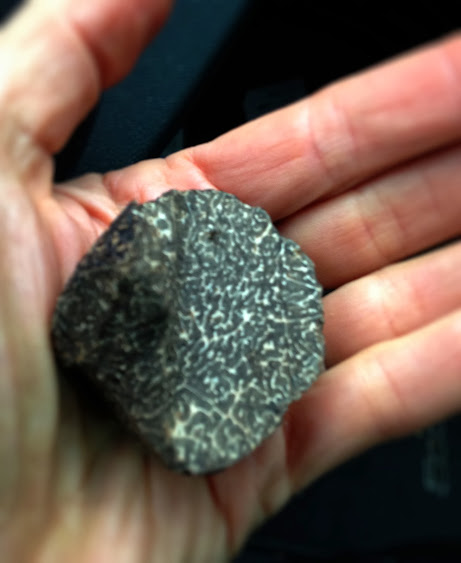
The problem was in getting a truffle in a very short amount of time that I could use for the dish.  After a few days of  phone calls, texts and internet searches, our friend Jeff Talbot over at Ancora came through with a nice chunk of black truffle.  Although the recipe called for the traditional white truffle from Alba (upwards of $2000 per lb!) I figure the black truffle at half the price would have a similar, although not nearly as flavorful, effect.

Tajarin is different from regular pasta in the amount of egg yolks used that give it a beautiful saffron yellow color.  It is a handcut pasta that takes some time to make, but if you are going to the trouble of fresh truffles, why not?  I used the best ingredients possible - fresh organic egg yolks, Panini organic Parmigiano and the best butter ever made, the Delitia Burro di Parma.  How can you go wrong?

We served the 2008 Einaudi Barolo Terlo that was not nearly ready to drink but was still beautiful with the rich, butter ladden dish!  


For the Pasta
The black truffle from Jeff at Ancora
2 cups all-purpose flour, plus more for working
9 large egg yolks, (about 2/3 cup)
2 tablespoons extra-virgin olive oil
3 tablespoons water, plus more as needed

For cooking and dressing the pasta
1 tablespoon Coarse sea salt, or kosher salt
½ pound butter, (2 sticks)
1 ounce white truffle butter, or more, brushed cleans
1 cup Grana Padano, or Parmigiano-Reggiano, freshly grated
Equipment
Pasta-Rolling Machine;

Directions
To mix the tajarin dough, put the 2 cups flour in the food processor, fitted with the metal blade, and process for a few seconds to aerate. Mix together the egg yolks, olive oil and 3 tablespoons water in a measuring cup or other spouted container. Start the food processor running and pour in the liquids through the feed tube (scrape in all the drippings). Process for 30 to 40 seconds until a dough forms and gathers on the blade. If the dough does not gather on the blade or process easily, it is too wet or too dry. Feel the dough, then work in either more flour or ice water, in small amounts, using the machine or kneading by hand. 

Turn the dough out on a lightly floured surface and knead by hand for a minute until it's smooth, soft and stretchy. Press it into a disk, wrap well in plastic wrap and let rest at room temperature for a half hour. (Refrigerate the dough for up to a day or freeze it for a month or more. Defrost in the refrigerator and return to room temperature before rolling.) 

Cut the dough in 4 equal pieces. Keeping the dough lightly floured, roll each piece through a pasta machine at progressively narrower settings into sheets that are 5-inches wide (or as wide as your machine allows) and 20-inches or longer. Cut each strip crosswise in three shorter rectangles, each about 7-inches long. 

Flour each of these rectangles and roll them up the long way, into a loose cylinder, like a fat cigar. With a sharp knife, cut cleanly through the rolled dough crosswise at 1/8 to 1/4-inch intervals. Shake and unroll the cut pieces, opening them into tajarin ribbons, each about 7-inches long and 1/4-inch wide. Dust them liberally with flour and set them on a floured towel or tray. 

To cook the tajarin, bring to the boil 6 quarts of water with the tablespoon salt. Meanwhile, melt the butter in the large skillet and dilute it with 1/3 cup of the hot pasta water. Heat until barely simmering. 

When the water is at a rolling boil, shake the tajarin in a colander to remove excess flour and drop them all at once into the pot. Stir well to separate the ribbons and bring back to the boil. Cook for only a minute or until the pasta is just al dente, then lift it from the water with a spider, drain briefly, and drop it into the skillet. 

Over low heat toss the tajarin until well coated with butter. Turn off the heat and toss in half the grated cheese. Shave coin-sized flakes of truffle-using half the piece-over the pasta and toss in. 

Heap individual portions of pasta into warm bowls. Quickly shave the remaining truffle, in equal shares, on top of each mound of tajarin and serve immediately.


Shaved Fennel Salad


Sicilia is where the wine and travel bug started for us.  In 2009 we worked together with the our friends Cynthia and Elisabetta of the Farmhouse Table to take a group of New Orleanians on our first wine and culinary tour of the island.  The food was exquisite, truly some of the best we've ever eaten, combined with a diverse, distinct wine culture that is unlike anywhere else in the world.  This dish is a traditional Sicilian style insalata with a few added twists like pomegranate and Kerry's microgreens.  It is quick and simple except for the segmenting of the citrus (instructions below).And the pairing?  We brought back a really cool bottle from our Oregon (another of our favorite places featured in our annual staff dinner) tour last year that I knew would be perfect, a 2012 Dominio IV Viognier/Syrah blend Rose' and it was amazing with the dish!

Ingredients
2 large round fennel bulbs, trimmed, and several fennel fronds set aside
Juice of 1 lemon
¼ cup extra virgin olive oil
4 large blood oranges, peeled and segmented
1 cup pomegranate seeds
Salt and freshly ground black pepper
microgreens for garnish
An 8-ounce chunk hard pecorino, such as sardo or toscano, for shaving

Directions
Using a mandolin or other vegetable slicer, shave the fennel crosswise into thin slices. Place in a bowl and toss with the lemon juice and olive oil. Add the blood orange segments, pomegranate seeds, and fennel fronds and toss gently to mix. Season with salt and pepper.

2. Arrange the fennel salad on four individual plates. Shave the pecorino in long shards over each plate, and serve.

Notes
SEGMENTING CITRUS

Using a paring knife, cut off the top and bottom of the fruit to expose the flesh. Stand the fruit upright on the work surface and, with your knife, carefully remove the skin and bitter white pith, working vertically from top to bottom and following the natural round shape of the fruit, turning it as you go. Carefully trim away any remaining pith.

To segment, hold the fruit over a bowl to catch the juices, and cut down along either side of the membrane to free each section of fruit. Then, if the recipe also calls for the juices, squeeze the membranes over the bowl to extract the remaining juices.

Gulf Shrimp da Zaccaria

Positano, definitely one of our favorite places on earth!
The theme for our annual staff dinner this year was "Food and Wine from Our Favorite Places on Earth" so you know that the Amalfi Coast had to be represented.  I found this great recipe from Mario Batali that he took from a restaurant in Atrani that overlooks the sea called "da Zaccaria".  However, I had a lot of shrimp so I served it in individual bowls with toasted bread instead of as bruschetta.  And of course we paired it with a local wine and the 2012 Taburno Greco Benveneto was truly fantastic!
Ingredients
1/4 cup extra-virgin olive oil
2 garlic cloves, sliced thinly
12 large shrimp, peeled and deveined
Zest and juice of 1 lemon
2 ounces Limoncello
1/2 cup dry white wine
4 slices of Italian bread
1 bunch chives, chopped
Salt and pepper

Pour the oil into a large saute pan over high heat. When just starting to smoke, toss in the garlic. Cook until it turns light brown.  Add the shrimp and cook for about 2 to 3 minutes, flip, and cook for 1 minute. Remove the shrimp.

Pour in the the limoncello, lemon juice, and wine. Bring to a boil and cook for 3 minutes.

Toast the bread. When sauce is done, turn off the heat, sprinkle in the chives and season with salt and pepper. Place a few shrimp atop each piece of bread, and top with the sauce and lemon zest.

Monday, January 27, 2014

Raptor Ridge Winery, Great Wine with a Conscious


It was a foggy October morning as our two minivans full of Oregon wine  obsessed New Orleanians made their way up into the Dundee Hills to the top of the ridge.  Stomachs full from our French butter, cream and pastry ladden breakfast, all were ready for a some wine to kick off the day's events. 
The Tuscowallame Vineyard, Dundee Hills
Nestled on the northeast side of the Chehalem Mountains, Raptor Ridge Winery awaits with views of the lush, green valley below and their beautiful Tuscowallame vineyard.  Founded in 1995 by Scott Shull, Raptor Ridge Winery gets its name from the many families of raptors—red-tailed hawks, kestrels, sharp-shinned hawks and owls—that share the winery’s 27-acre estate.

Kevin Wiles, our wonderful host
Our host, assistant winemaker Kevin Wiles, meets us in the tasting room with platters of local cheeses and meats and indulges us with a lineup of 6 wines before we take our glasses and a few bottles to the winery below.  Taking us through the facility and cellar below, Kevin is a wonderful guide.  We talk about the process, the people, the raptors and the land that are all involved in making Raptor Ridge Winery what it is - a beautiful place with socially and environmentally conscious people making great wine.

Early stages of fermentation, 2013 harvest

Katie looking at sugar levels through the refractometer.

Besides Kevin and elegance of their wines, there are many things I like about Raptor Ridge.  One is diversity; approximately nine different cuvées are made here, including Pinot gris, Grüner Veltliner, Rosé, Tempranillo, several distinct vineyard designates, and consistent blends of Willamette Valley Pinot noir and Reserve Pinot noir.  Another is quality; they produce a total of 7,500 cases per vintage at the winery and the winemaking team regularly tastes through and segregates every barrel into these select cuvées. Uncompromised quality is the focus, not quantity.  Another is their respect for the land and its human as well as nonhuman occupants - they serve as a release site for birds following rehabilitative treatment by local raptor rescue foundations plus a portion of the proceeds from every bottle the sell supports iSalud!, a non-profit healthcare program for vineyard workers and their families.

Join winemaker Kevin Wiles on Thursday for a tasting of 6 wines from Raptor Ridge, including a few from the exciting 2012 vintage, accompanied by a selection of Oregon cheeses and meats presented by Casey Foote of St. James Cheese.  The lineup of wines is listed below and you can click here to reserve your seat. Raptor Ridge Tasting

2013 Raptor Ridge Rose                                
2013 Raptor Ridge Pinot Gris                          
2012 Raptor Ridge Grüner Veltliner 
2012 Raptor Ridge Willamette Valley Pinot Noir                  
2011 Raptor Ridge Estate Pinot Noir                    
2012 Raptor Ridge Shea Vineyard Pinot Noir     

Monday, January 13, 2014

What We're Drinking, Staff Favs for 2014!

One of the downfalls of being in this business is that I get bored quickly.  With a constant parade of wine reps at the bar on a daily basis, sampling and selling their liquid wares, I'm always on the hunt for something that excites my palate.  There is so much amazing wine out there I have a hard time sticking with the same selections month after month.  The pros or cons of this, depending on how you view it, means that our inventory is rotating constantly. 

But what I also have to remember is that every one's tastes and passions are different and it is that diversity that makes all of this so interesting.  So in putting together our new wine menu I asked the staff what they are particularly excited about drinking right now and their enthusiastic response has resulted in one of our best menus yet! Here are some of their comments and be sure to come in for a drink at the bar as we have over 25 wines by the glass and more than 300 options by the bottle for you to choose from.

Casey Foote - My Brother caught a ton of fish from the Gulf before Christmas, froze them and gave me a bunch so oddly have been drinking a lot of whites this winter.  Loire Valley whites and Assyrtiko from around Greece goes great with those lovely fishes!  On the list:  2011 Montintin Sancerre and the 2012 Sigalas Aa, Assyrtiko/Athiri Blend

Kimi Kiviranna - I've been really into Loire Cab Francs lately and had one at August that I fell in love with! And even though it's not technically rose' season, I like seeing something interesting on the list for our year round fans.  On the list:  2010 Château du Hureau Tuffe Saumur Champigny and the D'Oupia Minervois Rose'

Matt Snyder - We were cooking gumbo the other night and I needed a bottle to pair with it.  I took home a Cotes du Rhone that was gorgeous with or without the food and highly recommend it!  I'm also really happy to see some of our Greek wine favorites back on the shelf and that Xinamavro is always a hit.  On the list:  2010 Terres d'Avignon Armoiries Cotes du Rhone and the 2012 Thymiopoulus Young Vine Xinomavro.

Adam Tustin - I took home a bottle of Montepulciano D'Abruzzo last night and think it would be a great, inexpensive by the glass pick!  On the list:  Farnese Fantini Montepulciano D'Abruzzo.

Erin Rhoads -  We've got so many great wines in our "cheap & tasty" section that would make delicious glass pours at good price points. Plus the Regaleali white from Sicily is always lovely and a nice introduction to Sicilian whites.   On the list:  2012 Amalaya White; 2012 Juan Gil Honoro Vera Monastrell plus the 2012 Tasca D'Almerita Regaleali Bianco
 
And me?  Even in the winter I find myself reaching for refreshing delicious whites most of the time unless I'm having a meal that demands a red.  If I'm eating a meat based dish or having some of those great Olli Salumi, I always reach first for an Italian red!  On the list: The 2012 Albert Mann Pinot Blanc and the 2012 Zabu Grillo and the 2010 Corsini Birillo from the Maremma in Tuscany


Monday, January 6, 2014

Sake & Small Plates Pairing Event


Join local culinary talent Chef Dan Esses, Sake Specialist Kimi Kiviranna and Winebow Import's Chris Noyse for this exciting sake and food pairing evening.  Learn about how sake is made, the different levels of quality and get a new perspective on saké and food pairing with this presentation of premium sake.  The quality, complexity and individuality of these wines inspired Chef Dan to come up with an amazing menu of non traditional pairings.  Click here for reservations:  Sake and Small Plates


Sake and Small Plates
Where:  Three Muses
When: January 28, 7pm
Cost:  $70 includes tax and tip


Tempura shrimp with blood orange ponzu sauce 
Ichishima Silk Deluxe Junmai

Hamachi tuna Meyer lemon granite and rice cracker 
Hideyoshi Namacho Honjozo

Swordfish escabeche 
Manabito Ginjo

Braised pork belly, mustard greens , scallion pancake
Dewatsuru Kimoto Junmai 

Black pepper crusted New York strip, rutabaga, turnip, blue d'auvergne gratain
Chokaisan Junmai Daiginjo

"What's Your Favorite Wine?"

Picking grapes in Yamhill Carlton
...is a question you get asked a lot in this business.  My standard answer is that there is no one answer!  It's all about what is happening during a particular moment  in time - what I'm eating or doing, who I'm with and where I am. When Kerry and I grilled steaks at home a few weeks ago my answer would probably have been that 2005 Bongiovanni Barolo Pernanno.  Hanging out in Portland and salivating over plank roasted salmon?  My answer would be the 2010 Alloro Riservata Pinot Noir from Oregon.  Sitting at a seaside restaurant with friends on the Amalfi Coast?  The inexpensive house Falanghina served in a ceramic carafe tastes like the best wine on earth!

But what is an easy thing for me to talk about is my favorite red varieties, all of which will be featured in one event or another this month at the shop.  Because while I credit Sangiovese as the grape that got me into the wine business, it's my love of these 3 reds that keeps me here.

Volcanic Soils of the Etna
Nerello Mascalese
The first time I tasted a wine from the Etna, I knew that something very special was happening in the eastern part of Sicily.  We were in New York in late January 2009 for an Italian Trade Commission wine event and we needed a bottle of wine for our friend Lisa's birthday party. I had become intrigued by the region while researching the wine producing areas of the island for our first wine and culinary tour later that year with Cynthia Nicholson and The Farmhouse Table.  But there was nothing from the Etna in any of our wholesaler's portfolios because, like me, most had never really heard much about the region until I started inquiring about the wines.  

So, needing a bottle of wine to take with us to a little party, we popped into a shop in the East Village, that actually had a decent selection of Sicilian wines and there on the shelf was a wine by one of the producers I had been researching, Terre Nere.  The 2006 Etna Rosso was under $20, which was very reasonable for anything coming from the area, so I was really excited to try it.  And needless to say we were all impressed as it was lush (a prominent quality in the 2006 vintage) and easy drinking, with a purity of fruit and hints of dark cherries, tobacco and wild herbs, it had an earthiness and texture reminiscent of Burgundy but is distinctly Sicilian. Made with Nerello Mascalese, a native grape to the region, I was now completely obsessed  and have been ever since.  

Holmes Hill in Eola-Amity
Pinot Noir
Oregon Pinot Noir had been slowly, subtly, seeping its way into my wine consciousness since I met James Moises in the summer of 2009.  Wrongfully lumping it into my not so favorite category of new world wines, it has always been lurking just a bit under the radar for me.  And even though our wine reps have been bringing me Oregon Pinots for years, it was my personal relationship with James that made me want to learn more about this place that was drawing him away from his lifelong medial career and home town of New Orleans to make wine.  

So when James asked us to visit him in Oregon we got to experience first hand the really special things that are happening in the Willamette Valley. While there are a handful of big money, fancy wineries in the area, the majority of the producers are small and passionately making artisan wine from tiny, individual plots of land that they are farming themselves or from carefully selected purchased fruit. Fantastic wines without pretense where quality over quantity is the rule, sustainability is a lifestyle and where visitors always feel welcome and the winemaker is never far away… I have to admit, I thought I would get bored with drinking Pinot for 5 days straight, but I didn't, not in the least.  The wines are the the perfect blending of the old and new world; subtle, elegant, higher acidity levels but still with beautiful, intoxicating fruit.  The different vineyard sites and vintages offered such unique expressions of the grape that I just couldn't, and still can't, get enough.  

Nebbiolo
It seems that anyone in this business who loves old world wines, tastes and drinks wines from all over the planet, eventually end up in either the Burgundy or Piemonte camp or both.  For me and my love of Italian wine it is Piemonte and the Nebbiolo grape that currently have my full attention. How can you not get completely intoxicated just on the perfumey aromatics alone of a good Barolo or Barbaresco? With their hedonistic mix of sweet and savory flavors of leather, spice, tar, rose petals and dried red fruit on the nose combined with an array of flavors that explodes across the palate - they are the stuff that wine enthusiasts' dreams are made of!

But the difficult thing with these wines is having the patience to wait until they are ready to drink.  Even the production standards alone for Barbaresco and Barolo require it; 2-3 years between oak and bottle for the DOCG and the riserva wines require up to 4-5 years of total aging respectively.  Young nebbiolo from these regions can be fiercely tannic, which then allows you to explore Piemonte's other regions like Gattinara, Ghemme, Roero and Langhe for younger wines that are softer and more accessible. 

So in following suit with my first two favorites, I now find my self planning a trip to Piemonte this spring.  And through researching this trip, I have again reached that turning point where interest becomes obsession.  I tend to immerse myself fully in that place; learning the history, cooking the food and of course drinking the wine as I patiently wait for April to arrive.  Because when you visit the region itself, there is nothing quite like the connection to its people, its land and its culture that solidifies that place in your heart, mind and palate.  So I'm quite sure you'll be hearing a lot about Piemonte in the coming months...

But in the meantime I've scheduled some events to help curb my appetite a little; a seated Nebbiolo and cheese pairing with Italian Wine Specialist Antonio Molesini & St. James Cheese; a seated wine and cheese session with winemaker Kevin Wiles of Raptor Ridge in Oregon and St. James Cheese; and fun Wednesday Nite Flite this week featuring the wines of Sicily!  

If you are interested in attending any of these click on the links below for more information!

-Wednesday Nite Flites - Sicilia!  January 8, 6-8pm.  $15, reservations are not required but you are sure to get a spot if you do!
-Nebbiolo, The Noble Grape of Piemonte, January 23rd, 6-8pm.  $33, reservations are required.  Limited seating
-Raptor Ridge Wines with Kevin Wiles, January 30th 6-8pm, $28 reservations are required.  Limited seating


Sunday, December 8, 2013

Celebrate Slow Wine and Slow Food, Terra Madre Day at Swirl!


Terra Madre Day, December 10th, marks the anniversary of the founding of the Slow Food movement in Italy in 1986 by a passionate guy named Carlo Petrini.  It's a day when  food communities and Slow Food chapters around the world celebrate eating locally and sustainable local food production in more than a 1,000 events: collective meals, community festivals, protests, workshops for children, excursions to producers and much more are held to promote local food traditions and demonstrate the Slow Food philosophy of good, clean and fair food to communities, media and decision makers. This year the Slow Food NOLA event will be hosted at Swirl where we are teaming up with our friends from Fat Falafel for an evening of Slow Wine and Slow Food!  

So just what exactly does that mean? Slow Food publishes a great Italian wine guide called "Slow Wine" in support of producers who not only make great wine but who are also passionate about their bond with the land and their choice of cultivation and cellar techniques - favoring those who implement ecologically sustainable wine growing and winemaking practices.  Slow Food panels of judges visited over 400 wineries and have compiled reviews of over 3000 wines. So our role in tonight's event will be to serve wines at the bar from producers highlighted in the book for their support of good, clean and fair.

Fat Falafel will be supporting another initiative of Slow Food by preparing a dish using a food that is part of the Ark of Taste program.   Slow Food's Ark of Taste is a catalog of over 200 delicious foods that you’ve maybe never heard of, because, for one reason or another, they’ve been cast aside by the industrial food system.  So besides all of the other great stuff they already serve on the truck, Gavin and Teresa of Fat Falafel will be preparing a special dish on the menu specifically for the event.  A portion of the proceeds from Fat Falafel's sales of that one delicious item and the bar sales from our 5 special Slow Wines, will be donated to Slow Food.

And just in case you want to know, Swirl represents many of the producers in the book and you can look for the Slow Food snail on the bottles to indicate which ones are considered worthy of the Slow Wine snail of approval!  Check out the list below and come to the shop on Tuesday where 5 of the following wineries will be represented on our special by the glass menu! The hard part is going to be picking 5 from this amazing list.

Italy's Slow Wine Producers currently available at Swirl:
Allegrini - Veneto
Occhipinti - Sicilia
Terlano - Alto Adige
Caggiano - Campania
Librandi - Calabria
Terre Nere - Sicilia
Foradori - Trentino
Velenosi - Marche
Donnafugata - Sicilia
Planeta - Sicilia
Gaja - Piemonte, Toscana
I Vigneri - Sicilia
Travaglini - Piemonte
Le Morette - Veneto
La Spinetta - Toscana
Boscarelli - Toscana
Bartolo Mascarello - Piemonte

Monday, December 2, 2013

The Oregon Pinot Show, A Tasting of Artisan Wines from 2008, 2009 and 2010

Holmes Hill Vineyard in Eola Amity with James Moises, 2012 Harvest

Vintage variation is a term you hear a lot when you talk with winemakers.  And depending on where they make wine you'll here the term more or less often. But in Oregon, where the premier growing region of the Willamette Valley sits between two mountain ranges and is less than 70 miles from the Pacific ocean, you hear it loud and often. The weather can literally change from minute to minute and from one mile to another; sunny on this vineyard, misty rain on the next.

Vintages tell a story about what happened to the vines from winter to harvest. How much rainfall or how much sun; how hot were the days and how cool were the nights?  Did mother nature throw in a hail storm or monsoon like winds that decreased the yields?  Did the winery pick their grapes early in fear of bad weather or bite their nails and wait it out?  All of these climatic influence and decisions leave an unmistakable footprint on the wine that makes it virtually impossible for a bottle from the same vineyard to taste the same year after year.  And as frustrating as that can be at times, it is also part of the magic that happens when you grow, harvest and bottle a living, continually evolving entity and close it up!  It goes through many stages, some good and some less so, which is what makes wine so intriguing!

In this seated tasting, led by producer and distributor of artisan wines from Oregon James Moises, we'll taste and compare wines from the 2008, 2009 and 2010 vintage and talk about how these factors influenced what is in your glass. We've selected a beautiful lineup of small production wines that range in price fro $37 to $65 per bottle and we'll pair them with cheeses selected and presented by Casey Foote of St. James/Swirl. The event is Thursday, December 5th, tickets are $33 per person and seating is extremely limited.  .  You can click here to reserve online:  The Oregon Pinot Show

2009 Lumos Wine Company Pinot Noir Temperance Hill,  688 cases produced
The Lumos Wine Company is the product of the efforts of its owner/winemaker, Dai Crisp, who was first introduced to viticulture in 1986 when he helped his parents plant a small, 10-acre vineyard on their farm in Wren, Oregon. In 1990 he became manager of Croft Vineyards where he began to develop his own unique style of grape growing. Then in 1999, Dai took on the 100-acre site at Temperance Hill Vineyard, where he is currently manager. While always interested in the process of wine-making, it wasn’t until Dai had proven to himself and others that he could grow an outstanding wine that he finally made the leap with his own label.

Robert Parker's Wine Advocate, 92 pts:  The 2009 Pinot Noir Temperance Hill Vineyard also displays some herbaceousness but less so than the 2009 Fine Block. Savory on the palate with relatively elevated acidity, this nicely proportioned wine is on track for some longevity. Give it 2-3 years of cellaring and drink it through 2023+. If it evolves as I think it will, it should merit an outstanding rating in the relatively near future. 
291 cases produced

2010 Eminent Domaine Willakia Pinot Noir, 600 cases produced
Eminent Domain, the legal term, hit Eminent Domaine owner Jeff Meader hard.  When the laws of eminent domain were used to take his property in downtown Portland, it "inspired" the birth of Eminent Domaine Winery. Located in McMinnville Oregon, Eminent Domaine makes single vineyard wines of limited production and interestingly use only a single clone of Pinot Noir.

The Willakia vineyard is located towards the northern end of the Eola-Amity Hills. During the growing season, ocean breezes push through the Van Duzer Corridor in the Coastal Range maintaining a consistently cool climate that is the hallmark of great Pinot Noir winegrowing regions.

Made from 100% Pommard clones, the 2010 Willakia has dark cherry and black raspberry fruit with dusty tannin showing through this richly styled balanced wine. Savory components showing of spice and tea like qualities tied with a solid core of bright fruit go on through the long finish.

2010 Alloro Pinot Noir Willamette Valley, 1200 cases produced

Alloro, Italian for laurel, is a small winery that crafts entirely Estate grown Pinot Noir.  From the southwest facing slope of Laurel Ridge in the Chehalem Mountains, the vineyard plantings start at 475 feet and rise to about 650 feet and have either a southwest or southeast aspect.  The soil is classified as Laurelwood Series, a silty soil made of ancient decomposed volcanic material with a top layer of ancient sediment.

Wine Spectator did an article on Oregon's 2010 vintage and the Alloro Riservata Pinot Noir is chosen as one of the top 20 wines out of 550 tasted for the article and the Chehalem Mountain Pinot scored 92 points.  The wines are made by their
Burgundy trained, UC Davis educated Winemaker, Tom Fitzpatrick who loves the challenge of capturing the expression of place at a unique moment in time - no matter what a particular vintage may throw at him.

2010 Wine Spectator, 92 points - Sleek and refined, with a nice point to the black cherry and mineral flavors, lingering with haunting delicacy on the finish. Drink now through 2018. - H.S.

2008 De Lancellotti Family Vineyards Pinot Noir Chehalem Mountain, 500 cases produced
The De Lancellotti Family Vineyard's owners Paul and Kendall de Lancellotti bring to Oregon Pinot Noir a dedication to organic and sustainable grape growing practices that is rare to find and hard to achieve.

A hallmark of Paul and Kendall's winemaking philosophy is their commitment to stewardship of the land. In 2004, they received Biodynamic certification for their 27 acre vineyard. Certification is a complex process involving a commitment to the land and to the cycles of nature, as well as to strictly regulated winemaking practices. The Bergstrom and the deLancellotti Family Vineyards operations were the first two vineyards in the Willamette Valley to be certified Biodynamic. In 2008 they received the highest level of Biodynamic farming, Demeter certification. Using France's great Burgundies as his benchmark, Paul deLancellotti aims to bring subtlety and elegance to his signature Pinot Noirs.

IWC & WS, 92 points: Full, bright red. Sexy bouquet of raspberry, cherry-cola and potpourri, with subtle woodsmoke and anise qualities in the background. A juicy, spicy midweight that offers sweet red and dark berry flavors and a zesty mineral spine. Darker fruits come up on the finish, which lingers with impressive juicy persistence. Very attractive right now but has the balance to reward another four to six years of bottle aging, at a minimum.

2008 Wahle Cellars Yamhill Carlton, 300 cases produced
This is a single vineyard owned by the Wahle family from one of the oldest and most highly regarded vineyards in the Willamette Valley.  Mark's family were some of the first growers in Oregon and in 1974 they chose to plant their vineyard on a 100 acre hilltop in the Yamhill-Carlton AVA. Mark, second generation, earned a degree from UC Davis in Enology & Viticulture in 1988 and is the reason our friend James Moises is now in the wine business!

From the historical 2008 vintage, this wine is made using the old vines in the his family's Yamhill Carlton Vineyard.  Showing its ageworthyness, even at 5 years old it still takes time to open up, but with patience reveals dark cherry and raspberry notes on the palate combined with impressive intensity, structure and a beautiful finish.  As with all of Mark's wines, the oak is well integrated and the tannins are nicely balanced.  I'm sure this one will be scooped up at the event!


2009 Moises Vieux Carre, 100 cases produced
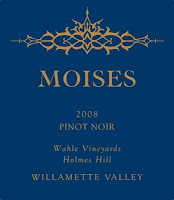
Born and raised in New Orleans, Jesuit and LSU graduate, ER doctor and professor, Dr. James Moises is a busy man. Somehow between working in the ER and teaching, he is finding time to follow his other passion, making wine. And not just any wine, we’re talking very small production, serious Pinot Noir from Oregon’s Willamette Valley made with sustainable vineyard practices and minimalist intervention in winemaking.  James’ first vintage release was in 2006, producing an old vine Pinot with fruit from friend Mark Wahle’s original family plot that was planted in 1974, and a Holmes Hill Pinot from the recently planted 40 acre site. Total production was only 150 cases in 2006 and in 2007. With the release of the Vieux Carre, a blend of the old vine Yamhill Carlton and the Holmes Hill fruit, production increased to 300 cases. While Mark Wahle is the winemaker, James is there every step of the way, involved from planting to bottling and he wouldn’t have it any other way. He loves the creative process involved in “taking this cluster of fruit and producing something really special that will bring enjoyment to others.”


The Vieux Carre is a blend of grapes from old vine Wahle Family Yamhill Carlton Vineyard and the younger vines of the Holmes Hill Vineyard in Eola Amity.  Great plush, silky mouthfeel, delicious dark cherry fruits with balanced acidity and minerality it is a knock out! We will have magnums available in this wine during the tasting.


LinkWithin

Related Posts with Thumbnails